As this edition goes out, we are at the culmination of the year: garlic harvest time! Not before time too; we are down to the dregs of last years crop, which by this stage, is looking a bit sad. If I was designing a traditional culture, I would place a major festival at this time.
In Bendigo, we have had a generously wet winter and spring, so the vegie garden is going gangbusters. But so are the weeds! One of the challenges of living next to bushland is that we have realised we are the frontline for stopping the encroachment of domestic weeds into the bush. This spring we have fought a gruelling campaign against capeweed, which had exploded, partly due to our mismanagement. Lessons like these are a good reminder of how much caring for the earth is dependent on an intimate understanding of particular places.
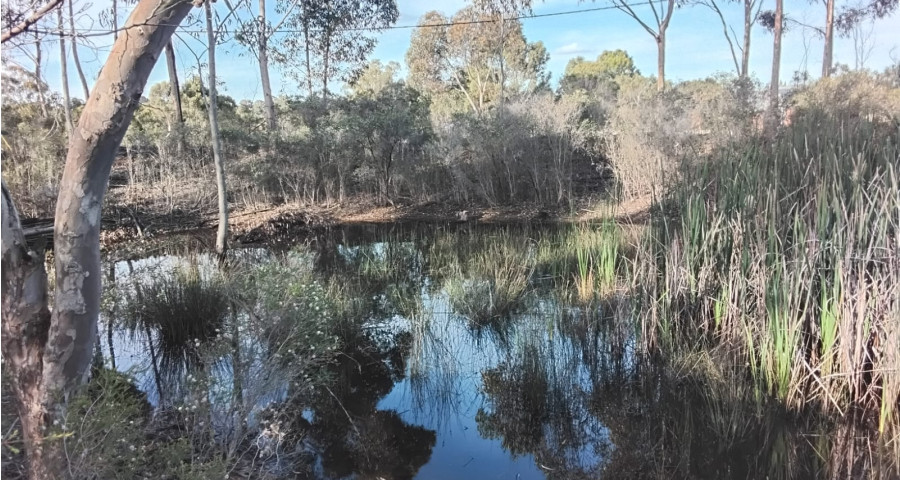
One of the joys of living next to our patch of bushland is that there is an old goldrush dam that, when we have good rains, effectively becomes a mini wetland. This year our wetland attracted more water birds than we have ever seen here before: white-faced herons and wood ducks (who are regulars), but also pacific black ducks, white-necked herons, cormorants, dusky moorhens, and even a great egret. Apparently white-necked herons have staged a bit of a recovery this season, and have been sighted widely across Victoria.
It has been an intensely busy season for Manna Gum work too—perhaps our busiest ever. There is too much to detail here, but highlights include Jacob running a couple of workshops for young people in Brisbane last month on Christian ethical living and, for me, presenting a series of talks in September—two in Sydney and one in the UK (via Zoom)—marking the 100th anniversary of the publication of Religion and the Rise of Capitalism by the great economic historian and Christian thinker, R.H. Tawney. One of the talks I gave reflecting on Tawney’s legacy will appear as an article in the pages of Manna Matters next year.
Tawney’s work has played an important role in the development of the ideas that underpin Manna Gum, but it wasn’t until I undertook my recent writing and reflecting on Tawney that I realised how important it has been.
I first read Religion and the Rise of Capitalism twenty-five years ago, closely followed by another of Tawney’s great works, The Acquisitive Society. They had a big impact on me. In Religion and the Rise of Capitalism, Tawney unpacks the history of how the religion whose founder taught ‘You cannot serve God and money’ and ‘Do not store up for yourselves treasures on earth’ came to endorse the economic system of endless accumulation, showing just how disastrous the accommodation of capitalism has been for the integrity of the Christian message. In the conclusion of The Acquisitive Society¸ Tawney lays out his vision for a renewed church that has rejected the logic of capitalism and reclaimed the substantive life-affirming economic ethics that is integral to faith in Christ. These two books, more than any others, planted the seed that has become Manna Gum.


It is fascinating to think that the ideas of someone who lived and struggled against the oppressions of his time, one hundred years ago on the other side of the planet, might germinate into something fresh in a completely different time and place. Leo Tolstoy once wrote:
The most important acts, both for the one who accomplishes them and for his fellow creatures, are those that have remote consequences.
This thought should give us some pause, when we continually try to measure our ethical action by its ‘effectiveness’ in the near term. I take some heart from the parable of the sower, where seed is scattered without any seeming thought for effectiveness. We don’t know for whom the seeds we sow will germinate, or when…
Jonathan Cornford